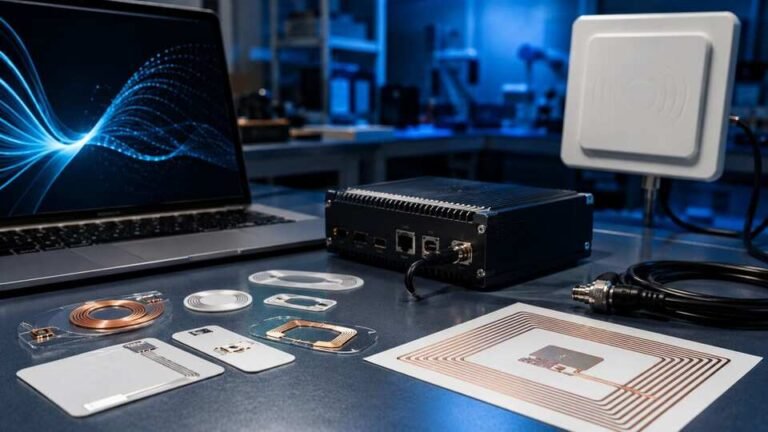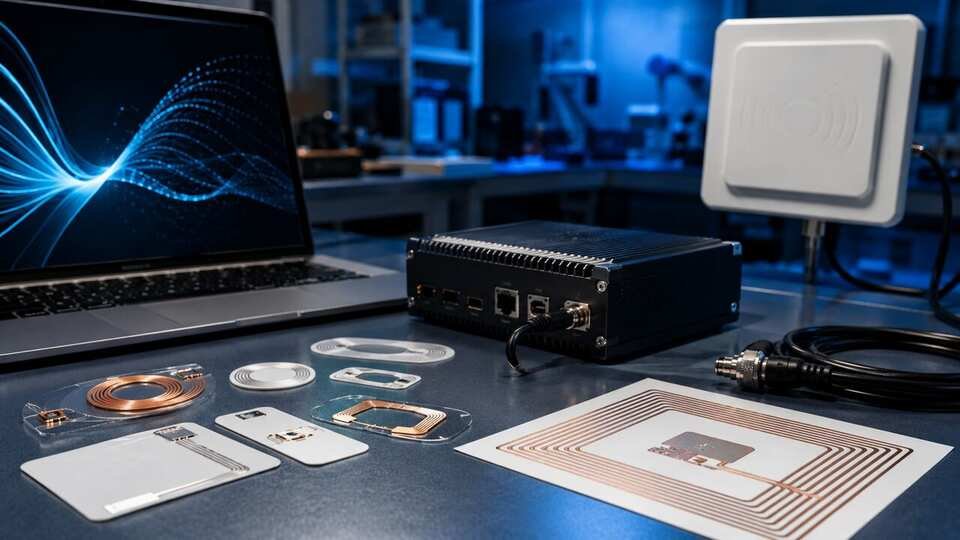
RFID Education and Training: How to Build Practical Skills
Editorial archive note: This original training guide preserves the RFID education topic referenced by a legacy RFID Product News URL.
For an authoritative standards reference, see GS1 EPC/RFID standards when evaluating interoperability and deployment requirements.
RFID training should connect radio fundamentals with the decisions people make in the field. A learner who can describe a protocol but cannot diagnose a missed read still needs practical experience. The strongest programs combine short theory lessons, controlled experiments, data interpretation and a written deployment plan.
A balanced curriculum
- RFID frequencies, coupling, modulation and tag construction.
- Readers, antennas, polarization, power and read-zone geometry.
- Identifiers, middleware, event models and system integration.
- Testing, troubleshooting, privacy, safety and procurement.
- Business cases, total cost, change management and measurement.
Assessment through evidence
Ask learners to document a test setup, predict a result, collect reads, explain misses and recommend the next experiment. Include metal, liquid, orientation and interference examples. Require a clear distinction between a laboratory result and a production claim.
Teams can use our troubleshooting checklist, reader-range guide and cost framework as practical exercises.